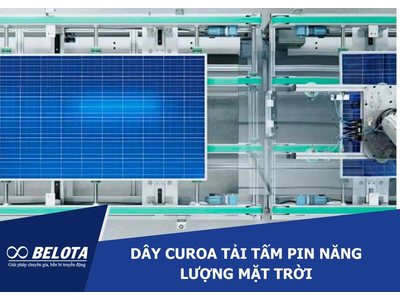
PTFE fabric for solar panel lamination is a material used in photovoltaic module laminators. It helps prevent EVA adhesion, withstand high temperatures, and protect equipment surfaces during the heating process. Made from fiberglass fabric coated with PTFE, this type of Teflon conveyor belt offers good mechanical strength, a smooth surface, and reliable performance in high-temperature environments. Depending on the press table dimensions and operating conditions, PTFE fabric can be selected in different thicknesses, widths, and lengths.
What Is PTFE Fabric for Solar Panel Lamination?
PTFE fabric for solar panel lamination, also known as Teflon fabric or flat Teflon conveyor belt (PTFE), is manufactured from high-strength fiberglass fabric coated with a layer of PTFE. This material offers heat resistance, non-stick properties, and good mechanical durability under demanding operating conditions.
Thanks to these properties, PTFE fabric is used as a flat Teflon belt in solar panel laminators, where the belt must withstand high temperatures and prevent materials from sticking during the lamination process.
During lamination, encapsulation materials such as EVA are heated and pressed onto the photovoltaic module. Without a suitable PTFE fabric layer, molten EVA may stick to the press table or heating components, making cleaning more difficult and potentially affecting production efficiency.
Applications of PTFE Fabric in Photovoltaic Module Laminators
PTFE fabric is primarily used as a release and protective layer during the lamination of PV modules.
- EVA release: Prevents molten EVA from sticking to the press table surface.
- Heat resistance: Suitable for the high-temperature environment of solar panel lamination.
- Equipment protection: Acts as a barrier, reducing material residue and protecting equipment surfaces.
- Easy cleaning: Makes it easier to remove material residue after operation.
- Reusable: With proper handling and maintenance, the fabric can be used repeatedly.
Technical Specifications of PTFE Fabric for Photovoltaic Module Lamination
Depending on the requirements of each laminator, PTFE fabric is available in various thicknesses and dimensions.
- Product code: BLT025.
- Color: Brown.
- Base fabric: 7628 fiberglass.
- Weave pattern: Plain weave.
- Coating: Polytetrafluoroethylene (PTFE).
- Nominal thickness: 0.25 mm.
- Actual thickness: Approximately 0.23–0.25 mm.
- Weight: Approximately 480–500 g/m².
- Warp tensile strength: Approximately 1,860 N/5 cm.
- Weft tensile strength: Approximately 2,100 N/5 cm.
- Temperature resistance: Approximately -70°C to 260°C.
Common PTFE Fabric Models Supplied by Belota
|
Product code |
Thickness |
Maximum width |
Nominal weight |
Tensile strength (warp/weft) |
|---|---|---|---|---|
|
BLT025 |
0.23 ± 0.01 mm |
3,000 mm |
480 ± 10 g/m² |
2,100/1,800 N/5 cm |
|
BLT030 |
0.28 ± 0.01 mm |
3,000 mm |
560 ± 15 g/m² |
2,400/2,050 N/5 cm |
|
BLT035 |
0.33 ± 0.01 mm |
3,000 mm |
660 ± 20 g/m² |
2,600/2,300 N/5 cm |
In addition to these standard specifications, PTFE fabric can be supplied in custom widths and roll lengths to suit different solar panel laminators.
Key Advantages of PTFE Fabric for Solar Panel Lamination
PTFE fabric offers several properties that make it suitable for the production requirements of photovoltaic modules:
- Excellent non-stick surface: Prevents EVA and other molten materials from adhering to the fabric surface.
- High temperature resistance: Certain PTFE fabric grades can withstand temperatures ranging from -70°C to 260°C.
- Dimensional stability: The fiberglass structure helps minimize shrinkage and deformation when operating at high temperatures.
- Good tensile strength: Provides mechanical durability and helps the fabric withstand repeated installation and use.
- Chemical resistance: The PTFE coating offers resistance to many chemicals, including various industrial contaminants.
- Low coefficient of friction: Reduces surface friction and material adhesion, making cleaning easier.
- Flame resistance: PTFE has flame-resistant properties, making it suitable for high-temperature working environments.
- Easy cleaning and maintenance: Residue can be removed from the surface more easily during routine maintenance.
Instructions for Using and Maintaining PTFE Fabric
To extend the service life of PTFE fabric, proper installation, operation, and maintenance are essential.
- Flatten the fabric before installation: Lay the fabric flat and remove wrinkles to ensure consistent lamination performance.
- Clean EVA residue: Use a soft cloth to remove residue. Avoid sharp objects that could damage the PTFE coating.
- Avoid folding the fabric: Minimize folding or creasing to prevent permanent wrinkles and premature wear.
- Replace the fabric periodically: Replace it when signs of burning, tearing, coating damage, or reduced non-stick performance appear.
- Turn off the machine after use: Switch off the equipment after completing production to avoid unnecessary exposure to high temperatures.
Signs That PTFE Fabric Needs Replacement
After extended use, PTFE fabric may gradually wear out and should be inspected regularly. Common signs of deterioration include:
- Multiple burn marks or unusual discoloration on the fabric surface.
- Visible peeling or wear of the PTFE coating.
- Increased adhesion of EVA and other lamination materials.
- Tears, holes, or deformation in the fabric.
- Persistent wrinkles that cannot be flattened.
- Inconsistent lamination quality compared with previous production runs.
When these signs appear, replacing the PTFE fabric is recommended to minimize the risk of affecting solar panel quality and laminator operation.
Factors to Consider When Choosing PTFE Fabric for Solar Panel Lamination
Price should not be the only factor when selecting PTFE fabric. To choose the right product, consider the following specifications:
- Fabric thickness: Select a thickness that meets the machine and lamination process requirements.
- Dimensions: Ensure the fabric width and length match the press table.
- Temperature resistance: Choose a grade suitable for the actual operating temperature.
- Tensile strength: Particularly important for fabric installed on large laminators.
- PTFE coating quality: Directly affects non-stick performance and service life.
- Dimensional stability: Helps minimize deformation during heating.
- Product origin: Choose a supplier that provides clear technical specifications and can supply the required dimensions.
Where to Buy PTFE Fabric for Solar Panel Lamination?
If you are looking for PTFE fabric for solar panel lamination, Belota supplies PTFE fabric suitable for photovoltaic module laminators in various specifications. When contacting Belota, customers are encouraged to provide the machine dimensions, press table size, required fabric thickness, and order quantity to receive suitable product recommendations.
For large-format laminators, PTFE fabric can be cut to size or custom-made to match specific requirements. This helps simplify installation, reduce material waste, and ensure compatibility with actual operating conditions.
Conclusion
PTFE fabric is an essential material in solar panel lamination, helping prevent EVA adhesion, protect press table surfaces, and maintain consistent lamination quality. When selecting PTFE fabric, it is important to consider thickness, dimensions, tensile strength, and temperature resistance to ensure compatibility with the laminator. Belota supplies PTFE fabric for solar panel lamination in various specifications, with consultation and custom fabrication services to meet actual machine requirements and simplify installation and replacement.