In the seafood processing industry, especially shrimp, optimizing production workflows not only boosts productivity but also ensures hygiene standards and product quality. Shrimp processing conveyor systems provide an effective solution by automating material handling across each stage, reducing manual labor and minimizing contamination risks. So, what types of conveyors are used, what are their advantages, and what should you consider when selecting one? Let’s explore in detail below.
Overview of the Shrimp Processing Workflow
Shrimp is a high-value, nutrient-rich product and a key export of Vietnam’s seafood industry. To ensure final product quality, the preprocessing stage is critical and typically includes:
- Receiving raw shrimp
- Washing and removing impurities
- Size grading
- Head removal
- Peeling and deveining
- Chilling in ice water
- Freezing
- Packaging and cold storage
Throughout this process, conveyor systems ensure continuous material flow, reduce manual handling, increase processing speed, and maintain food safety standards.
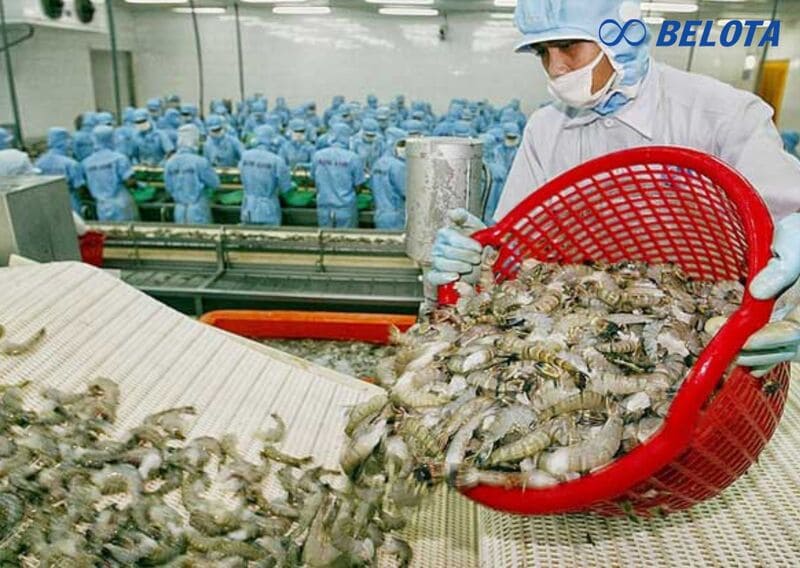
Common Types of Shrimp Processing Conveyors
Depending on each stage, factories select suitable conveyor types to optimize performance.
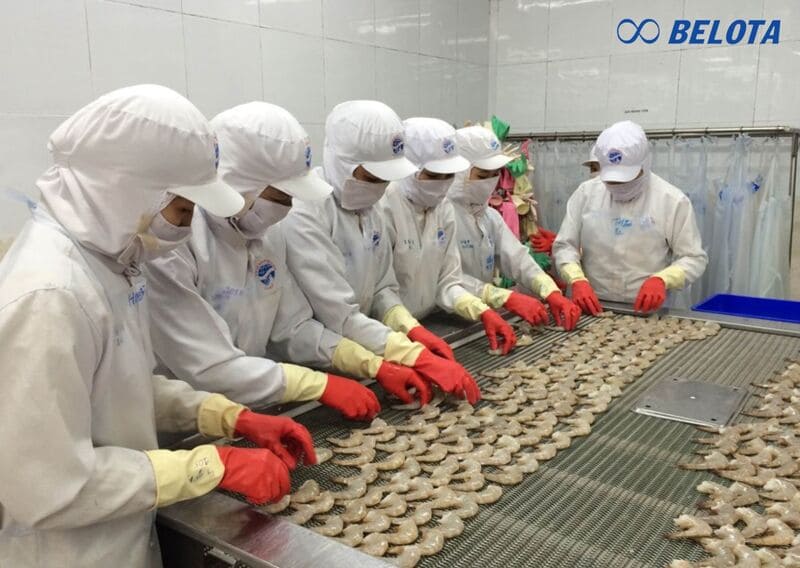
Stainless Steel Mesh Belt Conveyor
Widely used in head removal, sorting, washing, and primary processing zones—especially SUS 304 stainless steel mesh belts.
Key advantages:
- Excellent corrosion resistance in saline environments
- High resistance to temperature and chemicals
- Open mesh structure for efficient water drainage
- Easy cleaning, minimizing bacterial growth
-
High mechanical strength for continuous operation
- Compliant with HACCP and FDA standards
Applications:
- Head removalWaste (shell/head) collection
- Post-processing washing
- Raw material sorting
- Transfer to freezing area
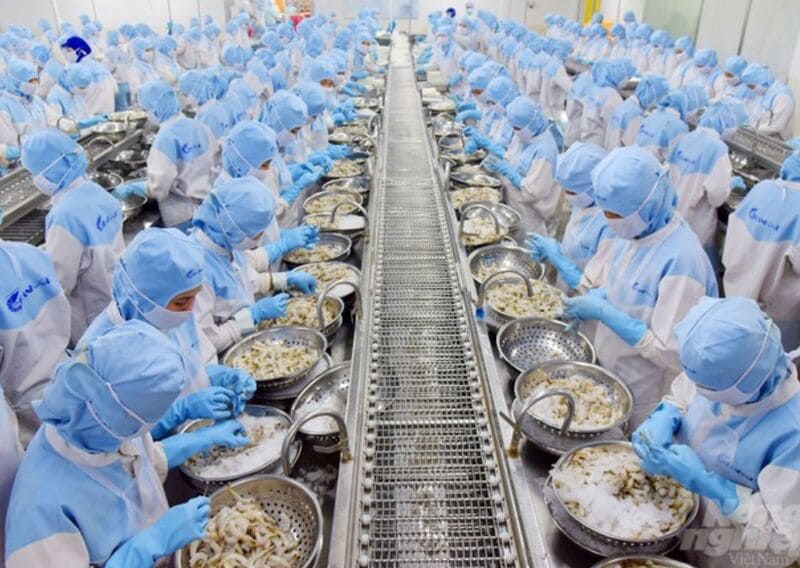
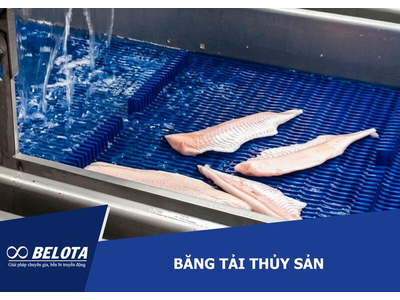
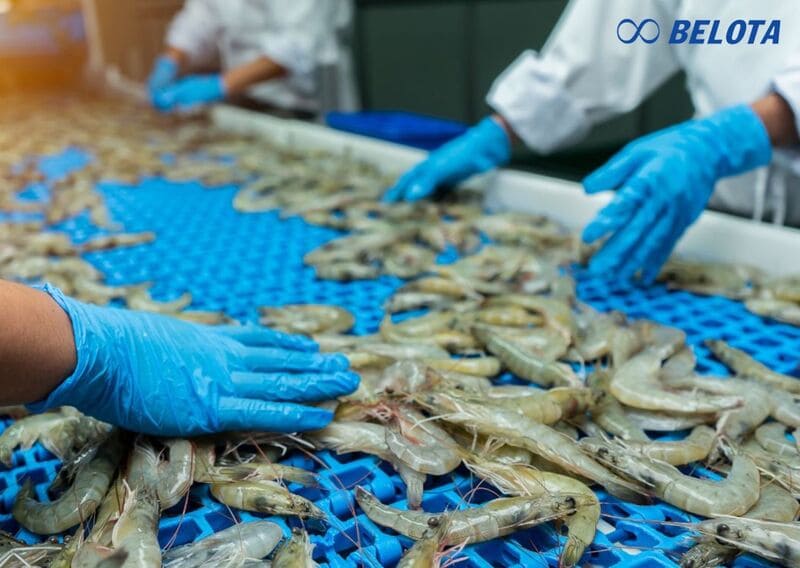
Modular Plastic Belt Conveyor
Commonly used in washing systems, IQF freezing lines, drainage areas, and finished product transport.
Key advantages:
- Modular design for easy assembly and maintenance
- Large open area for excellent drainage
- Anti-stick surface
- Corrosion-resistant in seafood environments
- Stable operation in cold conditions
- Low noise during operation
- Easy replacement of individual modules
Applications:
- Shrimp washing systems
- IQF freezing lines
- Drainage conveyors
-
Finished product tray transport
Key Benefits of Shrimp Processing Conveyors
- Increased productivity: Processes thousands of products per hour, far exceeding manual methods
- Food safety assurance: Uses food-grade materials like SUS 304 and certified plastics
- Labor cost reduction: Minimizes direct workforce requirements
- Easy cleaning and maintenance: Simple structure for quick sanitation
- Energy and water efficiency: Equipped with inverters to optimize speed and consumption
Operating Process of a Shrimp Processing Conveyor System
Step 1: Raw Material Intake
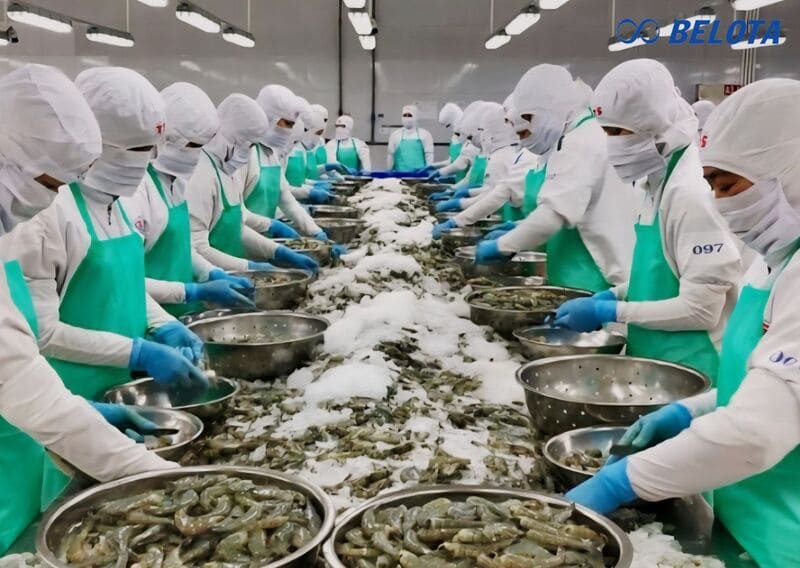
- Shrimp is fed onto the conveyor and transported to inspection areas for:
- Removing damaged shrimp
- Preliminary sorting
- Eliminating debris and impurities
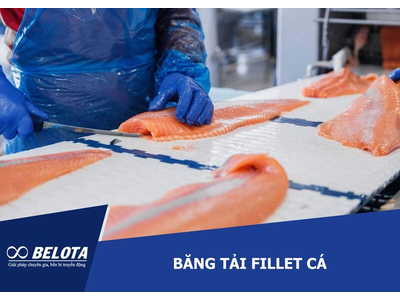
Step 2: Head Removal & Shell Collection
Shrimp moves via stainless mesh conveyors to operator stations for:
- Head removal
- Peeling
- Separating waste and finished products
- This step improves productivity, reduces water usage, and maintains cleanliness.
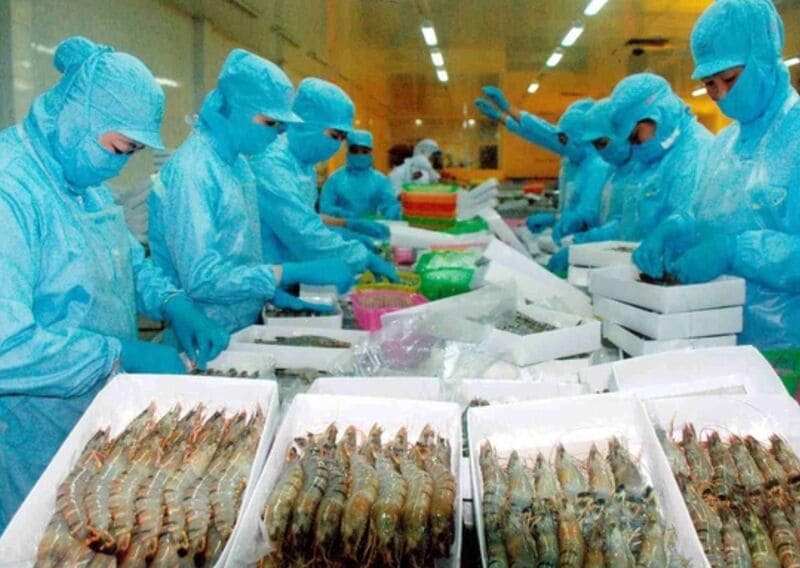
Step 3: Weighing – Packaging – Chilling
Processed shrimp is transferred to:
Weighing stations
Tray/box packaging
Ice water or brine chilling
Modular belts with open surfaces help improve drainage efficiency.
Step 4: Freezing & Cold Storage
Shrimp continues through:
- Freezing tunnels
- Cold storage warehouses
- Refrigerated containers for export
- The entire process is automated to ensure optimal product quality.
Reference Technical Specifications (Stainless Mesh Conveyor)
- Operators: 4–6 people per line
- Belt width: 195 mm
- Material: SUS 304 stainless steelMotor: 3 Phase – 220/380V – 50/60Hz
- Power consumption: 0.37 kW
- Dimensions:
- Length: 15,672 mm
- Width: 1,106 mm
- Height: 1,000 mm(Customizable based on factory requirements)
Belota’s Process for Supplying & Designing Shrimp Processing Conveyors
With extensive experience in seafood processing systems, Belota follows a structured approach:
Site survey & consultation: Analyze factory layout, capacity, and processing stages
- Optimized design: Detailed layout, structure, belt type, and system flow
- Material selection: Food-grade belts and corrosion-resistant materials
- Manufacturing & installation: Precision fabrication and on-site assembly
- Testing & handover: System testing, adjustments, and operator training
- Maintenance & support: Long-term technical support and servicing
Conclusion
Shrimp processing conveyors are essential in modern seafood factories. Choosing the right system—such as stainless steel mesh belts or modular plastic belts—helps optimize productivity, reduce costs, and ensure product quality. If your business is looking for an efficient seafood conveyor solution, contact Belota today for expert consultation and fast quotation.