In the food processing industry - especially in the production of bread, buns, and dough-based products—optimizing the sheeting process plays a key role in improving productivity and product quality. A dough sheeter conveyor belt is an essential solution that enables continuous, uniform dough handling, reduces manual labor, and ensures food safety standards.
What is a Dough Sheeter Conveyor Belt?
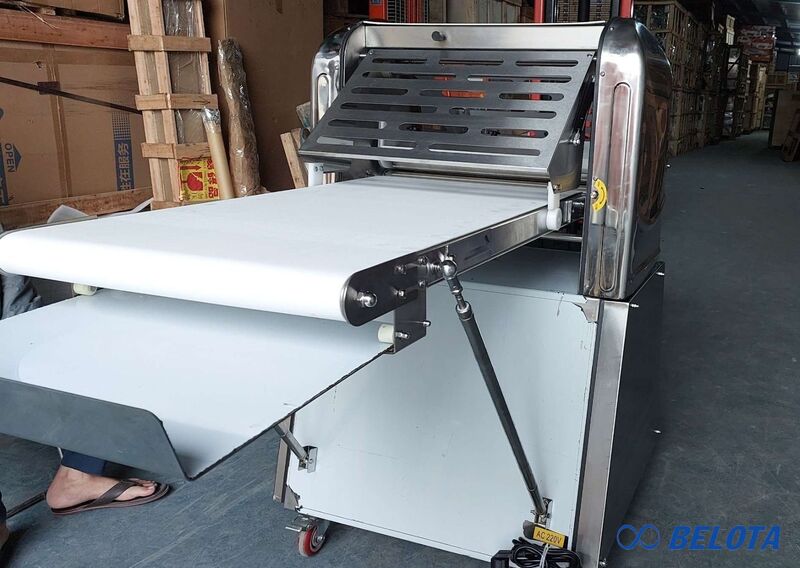
A dough sheeter conveyor belt is a conveyor system integrated directly into a dough sheeting machine. Its function is to automatically transport dough through the rollers, allowing it to be flattened evenly and continuously with minimal manual handling.
This system is commonly used in:
- Bread and bun manufacturing plants
- Medium to large-scale food processing facilities
- Industrial dough production lines
Common Types of Dough Sheeter Conveyor Belts
In dough sheeting machines, two materials are most commonly used: PU and PVC, due to their hygiene and processing stability.
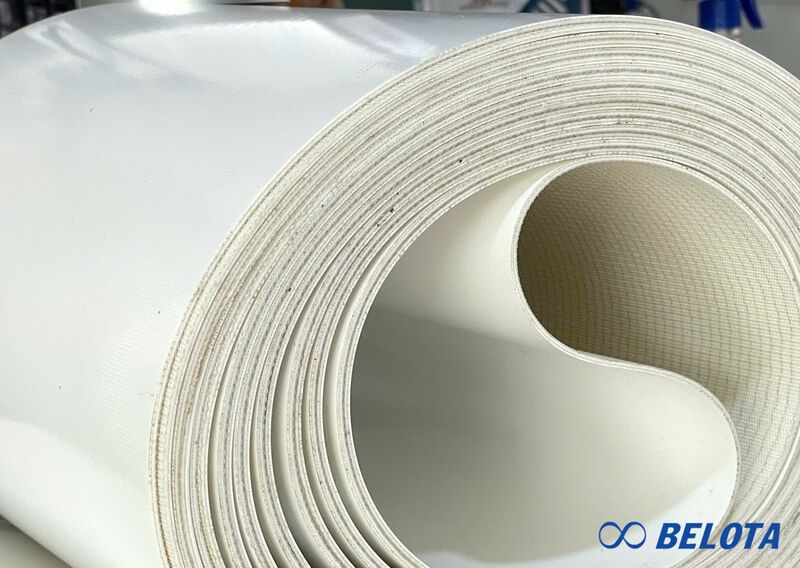
White PU Conveyor Belt (Polyurethane)
- Food-grade material suitable for hygienic environments
- Smooth, anti-stick surface that minimizes dough adhesion
- High resistance to oil and abrasion
- Long lifespan and stable operation at high speeds
White PU belts are widely used in industrial bakery lines where hygiene and consistency are critical.
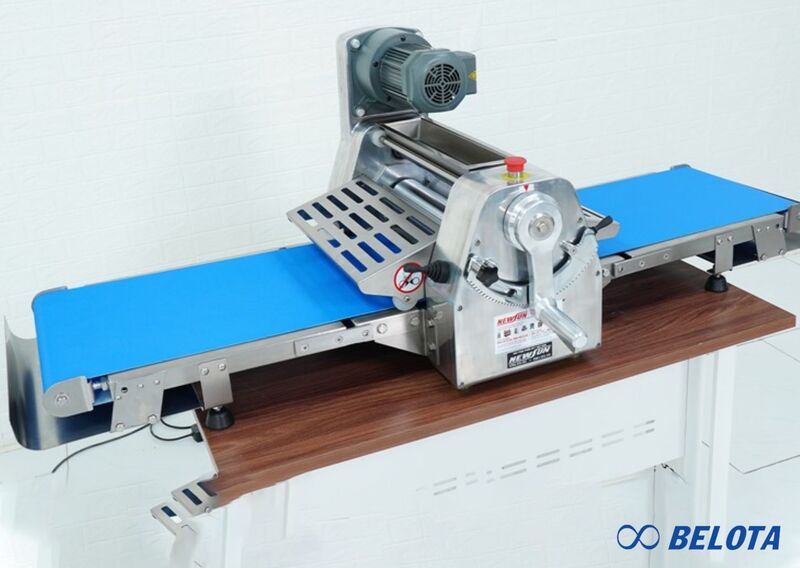
Blue PVC Conveyor Belt
- Cost-effective and widely used solution
- Smooth surface, easy to clean
- Suitable for general-purpose dough processing
- Easy to replace and maintain
Green PVC belts, especially blue-green variants, are ideal for small to medium-sized bakeries or applications with less demanding requirements.
Working Principle of Dough Sheeter Conveyor Belt
The system operates by combining the continuous movement of the conveyor belt with the pressing force of the rollers. Dough placed on the belt is automatically transported between two counter-rotating rollers, which apply pressure to flatten it evenly to the desired thickness.
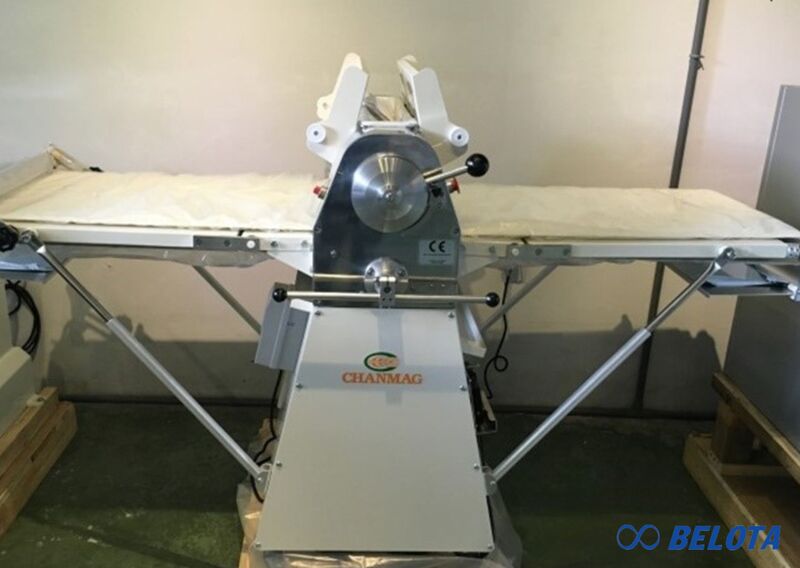
The conveyor keeps the dough stable during processing, preventing misalignment or wrinkling. In reversible (two-way) machines, the belt can change direction to return the dough for multiple passes automatically, improving smoothness and consistency.
Basic Technical Specifications (Example)
Typical specifications of a dough sheeter conveyor system (e.g., Berjaya models):
- Belt size: 500 x 2000 x 1.5 mm
- Belt width: 500 mm
- Material: Food-grade PVC/PU (FDA compliant)
- Motor power: 400W – 2200W (depending on model)
- Power supply: 220V / single phase / 50Hz
- Frame: Stainless steel or powder-coated steel
Key Features
- Continuous and automated operation: The conveyor feeds dough into the rollers and returns it efficiently, increasing productivity and reducing manual work.
- Food-grade materials: PU or PVC belts provide
- Anti-stick performance
- Easy cleaning
- Compliance with food safety standards
- High durability: Strong frame and wear-resistant belts ensure stable long-term operation.
- Flexible adjustment: Operators can adjust
- Conveyor speed
- Dough thickness (via roller gap)
Applications
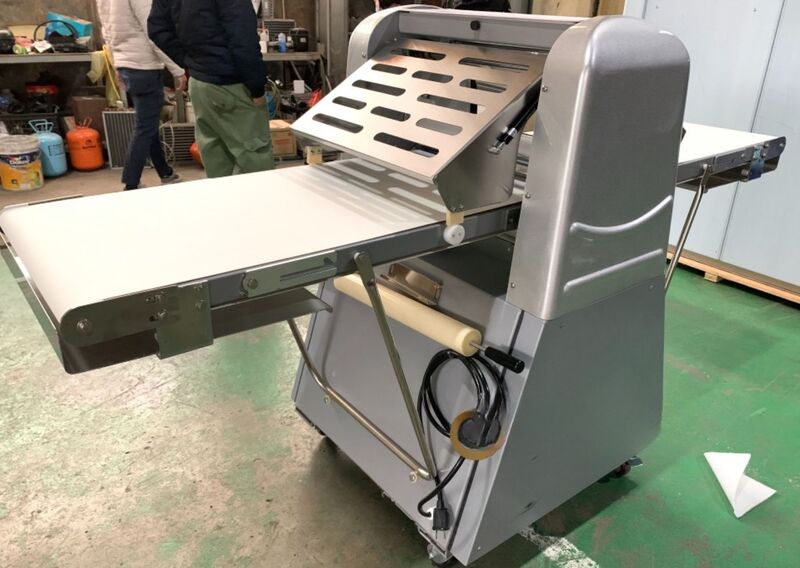
- Bread and bun production
- Noodle manufacturing
- Dough-based food processing
- Automated F&B production lines
The conveyor ensures consistent, smooth, and high-quality dough sheeting.
Single-Pass vs. Reversible Dough Sheeter
Single-Pass Dough Sheeter
- One-direction conveyor system
- Requires manual return of dough
- Capacity: ~25–30 kg/hour
- Lower cost, simple operation
- Limitations: Lower efficiency, more manual handling
Reversible (Two-Way) Dough Sheeter
- Conveyor moves forward and backward
- Automatic dough return
- Higher productivity and consistency
- Limitations: Higher cost, larger installation space
Why Choose BELOTA?
BELOTA specializes in industrial conveyor solutions, including food-grade systems:
- Tailored technical consultation
- Custom conveyor design for dough sheeters
- Certified food-grade materials
- Durable and stable performance
- Professional after-sales service
Conclusion
A dough sheeter conveyor belt is a critical component in modern food production lines. It enhances automation, ensures hygiene, and significantly improves productivity. Investing in the right conveyor system helps businesses achieve consistent quality and efficient operations. For tailored solutions and detailed consultation, contact BELOTA to find the most suitable conveyor system for your needs.