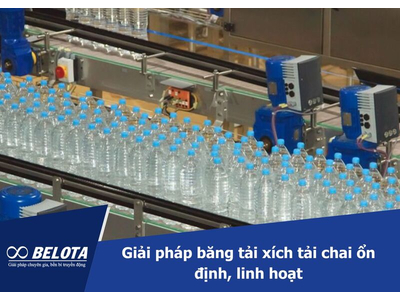
Glass bottles are relatively heavy and can crack or break when subjected to impact, requiring a high level of stability during transportation. In beer, beverage, food, and pharmaceutical production lines, bottles pass through multiple stages under different speeds and operating conditions. Therefore, glass bottle conveyor systems should be selected based on bottle dimensions, conveyor speed, straight or curved configurations, and the working environment. An unsuitable conveyor can cause bottles to tilt, collide with each other, increase operating noise, and lead to breakage.
What Is a Glass Bottle Conveyor?
A glass bottle conveyor is a mechanical conveying system used to transport glass bottles and containers between different stages of a production line. Depending on the requirements of each line, the system may use different types of conveyor belts or chains, such as:
- Plastic chain conveyors
- Steel or stainless steel chain conveyors
- Side-flexing chain conveyors
- Modular plastic belt conveyors
- PVC/PU conveyor belts for supporting applications
The conveyor type should be selected based on the characteristics of the bottles and the actual conveyor configuration rather than solely on the belt or chain material.
Where Are Glass Bottle Conveyors Used?
Glass bottle conveyor systems are commonly found in:
- Breweries
- Beverage production plants
- Bottled food production, such as sauces, cooking oil, and honey
- Pharmaceutical and medical bottle production
- Date coding, printing, and packaging processes
- Glass bottle return and reuse systems
Why Do Glass Bottles Require a Specialized Conveyor System?
Reducing Bottle-to-Bottle Impact
Glass bottles can crack or break when they collide, particularly when repeated minor impacts occur during transportation. Therefore, bottle spacing and the stability of the conveying surface need to be properly controlled.
The conveyor system should also provide smooth and consistent movement to reduce bottle shifting, collision, or loss of position when the conveyor speed changes.
Maintaining Stable Bottle Movement at High Speeds
High-volume production lines often require high conveying speeds. As speed increases, the chain must provide sufficient strength and stable operation for the application.
If the conveyor system is not properly selected, bottles may slip, shift, or change position during sudden acceleration or deceleration. This should be considered when selecting the chain and designing the conveyor system.
Handling Curves and Direction Changes
Curved sections require careful consideration when designing a glass bottle conveyor. During direction changes, bottles may tilt or fall, particularly bottles with a small base or a high center of gravity.
For curved sections, the conveyor chain should be specifically designed for the required radius to maintain bottle stability throughout the turning process.
Types of Conveyors Used for Glass Bottles
Plastic Chain Conveyor
Plastic chain conveyors are lightweight and generally produce lower noise levels than steel chains. They can be used for transporting various bottles, containers, and cases throughout conveying and packaging processes.
Plastic chains are suitable for production lines that prioritize smooth operation and lower noise, provided that the load capacity and working environment remain within the specifications of the selected chain.
Some common plastic chain models include 820, 821, 880, 880TAB, 882, 1873, and 7705. Each model may be suitable for different conveyor designs and products depending on its pitch, material, load capacity, and conveying configuration.
Steel / Stainless Steel Chain Conveyor
Steel chain conveyors offer high mechanical strength and are commonly used in glass bottle conveying systems that require higher load capacity or operating speeds. Depending on the production environment, either carbon steel or stainless steel chains can be selected.
Some Slat Top Steel Chain products from Ammeraal Beltech are designed for applications involving glass containers. They can be considered when replacing an existing chain or designing a new glass bottle conveying system.
Side-Flexing Chain Conveyor
Side-flexing chain conveyors are used in curved sections, allowing the chain to change conveying direction within its specified minimum radius.
For production lines with multiple curves or tight turning radii, the correct chain must be selected and its actual operating performance carefully evaluated.
Some Ammeraal Beltech chain designs feature Magnetic or Tab Plus+ configurations for curved conveying applications. Magnetic designs use integrated magnets to help stabilize the chain, while Tab designs use guiding tabs to support chain movement through curves.
Modular Plastic Belt Conveyor
Modular plastic belt conveyors are suitable for glass bottle conveying systems, particularly in beverage, food, and packaging applications. Depending on the conveyor design, the belt surface can be selected in closed, open-grid, or other specialized configurations.
For glass bottle applications, modular belts can transport bottles through processes such as bottle feeding, filling, capping, inspection, labeling, and packaging. The stable conveying surface, combined with side guides, helps reduce bottle tilting, shifting, or falling from the conveyor during operation.
In addition to Ammeraal Beltech chains and conveyor products, manufacturers can choose products from other suppliers depending on technical requirements, replacement compatibility, and investment budget.
Glass Bottle Conveyor Products to Consider
Ammeraal Beltech is one of the manufacturers offering chain products for conveying bottles, glass containers, and other packaging products. Some product groups that can be considered include:
- Slat Top Steel Chain: Steel chains designed for applications requiring high mechanical strength.
- Side-Flexing Chain: Chains designed for conveying applications involving curves and direction changes.
- Magnetic / Tab: Chain designs that support stable operation through curved sections.
These are only some examples of available solutions. Depending on the conveyor configuration, Belota can recommend additional conveyor belts and chains from Ammeraal Beltech or other manufacturers to meet specific system requirements.
Criteria for Selecting the Right Glass Bottle Conveyor
Bottle Size and Shape
First, determine the bottle diameter, height, and weight. Larger or heavier bottles require higher load capacity from the chain, belt, and drive system.
For small-diameter bottles, bottle spacing should be carefully considered to prevent tilting or collision. Larger and heavier bottles require a stable conveying surface and an appropriate guiding system.
Conveyor Speed
Determine the number of bottles per minute, chain speed, spacing between bottles, and required product accumulation. These parameters help determine the appropriate conveyor type and configuration for the required production capacity.
Bottle Type and Product Arrangement
The conveying configuration should be identified, including whether bottles are:
- Conveyed individually
- Conveyed continuously in a single row
- Conveyed in multiple parallel rows
- Accumulated in a specific section
- Placed directly on the conveyor or inside trays/cases
- Direction Change Capability
If the production line contains multiple curved sections, a Side-Flexing Chain or modular belt designed for curved conveying should be considered.
For glass bottles, the curve radius must be evaluated together with conveyor speed and bottle spacing. An excessively tight radius or high conveying speed can cause bottles to tilt, contact the side guides, or create congestion at the curve.
Working Environment
Consider exposure to water, oil, cleaning chemicals, temperature, broken glass fragments, and the hygiene requirements of the industry. These factors directly affect the appropriate belt or chain material and conveyor construction.
Load Capacity
The load calculation should not be based only on the weight of a single bottle. The total load on a conveyor section should also be considered, particularly in areas where bottles accumulate.
For higher-load applications, steel/stainless steel chains or modular belts with suitable load capacity may be considered. For moderate loads where smooth operation is a priority, plastic chains are a common option.
Maintenance and Replacement
In addition to the initial purchase price, manufacturers should consider service life, replacement component availability, downtime, and maintenance costs throughout the conveyor's operating life.
Comparison of Plastic Chain, Steel Chain, and Modular Belt Conveyors for Glass Bottles
| Criteria | Plastic Chain | Steel / Stainless Steel Chain | Modular Plastic Belt |
|---|---|---|---|
| Weight | Lightweight, reducing the load on the drive system | Heavier and requires suitable structural and drive components | Moderate, depending on module material and construction |
| Mechanical strength | Good, depending on material and chain design | High, suitable for higher loads | Good, suitable for various load levels when properly selected |
| Noise level | Generally lower, depending on speed and operating conditions | Can be higher due to metal-to-metal contact | Relatively low, depending on belt type and operating conditions |
| High-speed operation | Available in high-speed designs; selection depends on load and speed | Many designs are available for high-speed applications | Can support high speeds depending on belt design and application |
| Glass bottle conveying | Suitable for many conveying stages, especially where smooth operation is preferred | Suitable for applications requiring high mechanical strength and load capacity | Suitable for continuous bottle conveying with various belt surface options |
| Harsh environments | Depends on plastic material, temperature, and chemical exposure | Stainless steel is suitable for wet environments and applications requiring corrosion resistance | Depends on module material; some designs are suitable for wet and chemical environments |
| Curved conveying | Side-flexing designs are available | Side-flexing designs are available | Curved modular belt designs are available |
| Corrosion resistance | Does not rust; chemical resistance depends on material | Stainless steel provides good corrosion resistance | Plastic does not rust; chemical resistance depends on the plastic material |
| Cleaning | Easy to clean and suitable for many food applications | Stainless steel is suitable for environments with frequent water exposure | Convenient to clean; some designs are optimized for hygienic applications |
| Repair / replacement | Individual chain sections or links can be replaced depending on design | Damaged chain sections can be replaced | Individual damaged modules can be removed and replaced |
| Surface options | More limited and depends on chain type | Depends on chain type and surface design | Wide range of options, including solid, open-grid, and textured surfaces |
| Cost | Often easier to optimize depending on the chain type | Can be higher, especially for specialized stainless steel chains | Depends on material, configuration, and accessories |
Steel chains should not automatically be considered more suitable than plastic chains for every glass bottle application. The selection should be based on conveying speed, load capacity, production environment, conveyor configuration, and the overall design of the system.
Belota Glass Bottle Conveyor Solutions
Belota supplies a range of conveyor belts and chains for glass bottle conveying systems, depending on the requirements of each production line. Available solutions may include:
- Plastic and steel chains
- Side-Flexing Chains for curved sections
- Modular plastic belts and related conveyor solutions
- Ammeraal Beltech conveyor belts and chains
- Products from other brands based on technical and replacement requirements
Belota provides support in selecting conveyor solutions based on bottle dimensions, operating speed, load capacity, conveyor configuration, curve radius, and production environment.
For existing systems, customers can provide technical specifications or photos of the current chain and conveyor system so that a suitable replacement solution can be identified.
Frequently Asked Questions
How can bottle tipping, impact, and breakage be reduced at curved sections?
At curved sections, glass bottles can easily tilt or collide due to centrifugal forces and their center of gravity. The conveyor should therefore use a suitable Side-Flexing Chain, such as Magnetic or Tab designs from Ammeraal Beltech, where appropriate.
These designs can help stabilize chain movement through curves. However, the actual performance also depends on the bottle dimensions, conveying speed, curve radius, side-guide configuration, and product spacing.
Does Belota provide on-site inspection, consultation, and replacement solutions for conveyor chains?
Yes. Belota supports customers from new conveyor system design to replacement and periodic maintenance solutions.
Our technical team can work from technical specifications, product information, or photos of the existing conveyor system to recommend a suitable replacement or conveying solution.
How often should a glass bottle conveyor system be inspected and maintained?
For high-speed glass bottle production lines, the wear condition of the chain surface, wear strips, side guides, and drive system should be inspected regularly. Monthly inspections can be used as a general maintenance reference, while high-moisture areas or sections exposed to aggressive cleaning chemicals may require more frequent inspection and cleaning.
Maintenance intervals should ultimately be adjusted according to conveyor speed, operating hours, cleaning procedures, environmental conditions, and the manufacturer's specifications.
Conclusion
Selecting the right chain or conveyor belt helps maintain stable glass bottle transportation, reduce bottle-to-bottle impact, and minimize unplanned downtime. The selection should be based on bottle dimensions, conveyor speed, load capacity, conveyor configuration, curve radius, accumulation requirements, and the actual working environment.
Contact Belota for advice on a suitable glass bottle conveyor solution based on your existing or planned production line.
- Email: info@belota.com.vn
- Hotline/Zalo: 0917 657 946
- Address: B74 Le Thi Rieng Street, Thoi An Residential Area, Thoi An Ward, Ho Chi Minh City, Vietnam