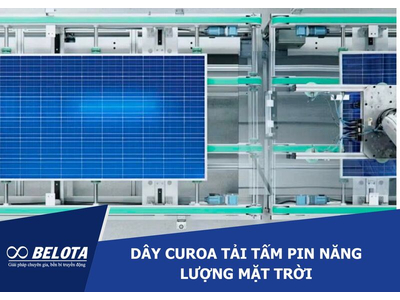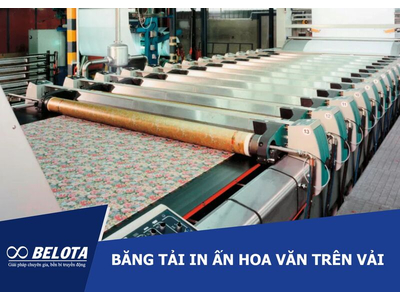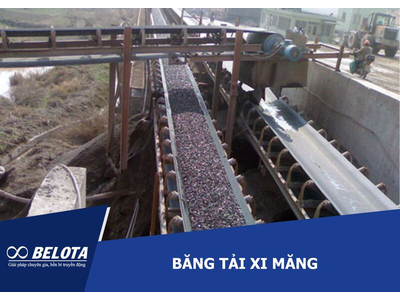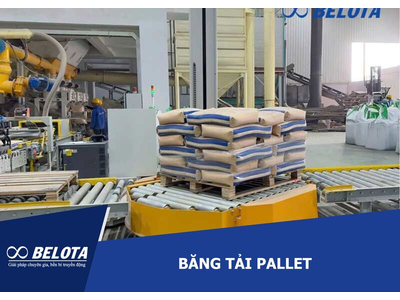
In modern manufacturing plants, warehouses, and distribution centers, packaging conveyors have become essential for automating transport and finishing processes. These systems facilitate the rapid, precise movement of goods, cutting labor costs and optimizing operational overhead. So, what exactly is a packaging conveyor? How is it built? And which models are currently leading the market? In this guide, Belota provides a comprehensive overview of this vital industrial link.
What is a Packaging Conveyor?
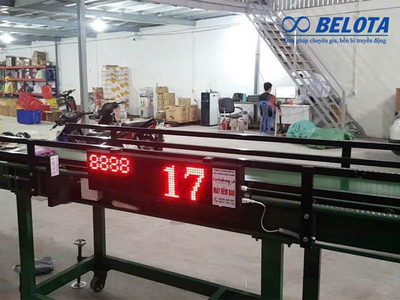
A packaging conveyor is a specialized system engineered specifically for the final stages of production. Built with durable conveyor belts, its primary mission is to transport goods from the manufacturing floor to workstations for packing, labeling, boxing, pallet wrapping, or dispatch.
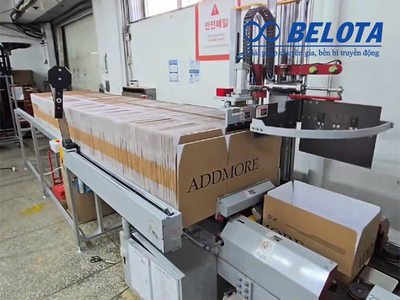
In the era of Industry 4.0, these conveyor systems are often integrated with advanced machinery to maximize operational efficiency and output, including:
- Automatic bagging/packing machines
- Carton sealers and tapers
- Strapping machines
- Pallet stretch wrappers
- Automated sorting systems
Technical Anatomy of a Packaging Conveyor
A standard packaging system is composed of four core pillars:
The Chassis (Frame)
Fabricated from powder-coated steel, stainless steel (inox), or extruded aluminum profiles. It is built for rigidity and durability across various environments, from food-grade cleanrooms to heavy-duty industrial docks.
The Conveyor Medium (Belt/Rollers)
- PVC/PU: Anti-static, slip-resistant, and wear-resistant.
- Rollers: High load capacity for heavy boxes or pallets.
- Stainless Mesh: Ideal for temperature-sensitive or wash-down applications.
Drive System
Powered by high-torque gearmotors, speed controllers, and drive pulleys designed for consistent, 24/7 operation.
Control Systems
Equipped with Variable Frequency Drives (VFDs) for speed adjustment, product counting sensors, and PLC integration for high-level automation.
Popular Types of Packaging Conveyors
PVC Conveyors
The most common choice for the packaging industry. The flat, stable friction of a PVC conveyor belt ensures smooth transit for cartons, plastic bags, or lightweight containers. It is the go-to solution for food, cosmetics, and pharmaceuticals due to its hygiene and cost-efficiency.
Roller Conveyors
Engineered to handle flat-bottomed goods like shipping cartons, crates, or pallets. Gravity roller conveyors (unpowered) are excellent for saving energy, while powered roller conveyors provide controlled movement in large-scale logistics and heavy-duty sorting zones.
Plastic Modular/Chain Conveyors
Built from interlocking plastic segments, these offer maximum stability. They are virtually "topple-proof," making them ideal for transporting bottles, cans, and jars in beverage or chemical bottling lines.
Inclined Conveyors
Used to move products between different elevations, for example, feeding bulk items into an automated bagging machine or a case packer. These are crucial for optimizing vertical space within a production facility.
Specialized Systems
Accumulation Conveyors: These allow products to "dwell" or pause on the line without stopping the entire system. This is vital for buffering products between fast and slow machines (e.g., between a filler and a labeler).
Sorting Conveyors: Designed to divert products based on size, weight, or barcode data. These are the "brain" of e-commerce fulfillment centers and modern logistics hubs.
Why Invest in Quality Packaging Conveyors?
- Boosted Throughput: Drastically reduces cycle times and speeds up order fulfillment.
- Labor Savings: Automates repetitive manual tasks, allowing staff to focus on quality control.
- Enhanced Safety: Reduces the need for manual lifting and hazardous forklift traffic in packing areas.
- Product Integrity: Minimizes mechanical shocks, preventing damage to fragile packaging or products.
How to Choose the Right System
Before making a capital investment, consider these four factors:
- Product Profile: Dimensions, weight, and fragility. Is it a carton, a bag, or a pallet?
- Throughput Requirements: Units per hour and required line speed.
- Facility Footprint: Do you need straight runs, curves, or vertical lifts?
- Operating Environment: Is it a wet, cold, or high-temperature zone?
Belota: Your Partner in Packaging Automation
Investing in a packaging conveyor is a long-term strategy to stay competitive. Belota specializes in custom industrial conveyor solutions, from standard PVC lines to complex automated systems. Our team combines technical expertise with high-grade components to deliver systems that are stable, durable, and tailored to your specific production flow. A well-designed packaging conveyor doesn't just move products, it moves your business forward. Contact Belota today for a technical consultation and quote.