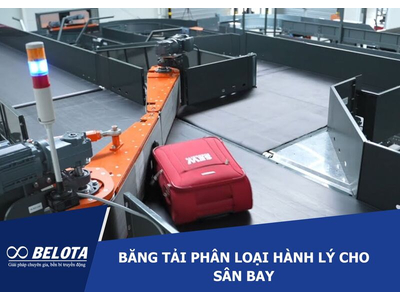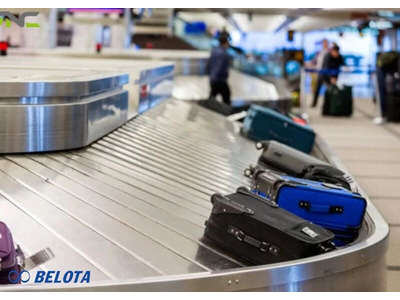
At airport check-in counters, baggage is received, weighed, tagged, and transferred to the Baggage Handling System (BHS). Conveyor belts in this area must reliably handle various types of luggage, including wheeled suitcases and bags of different weights. Selecting the right belt surface, construction, and splicing method helps ensure that the system meets airport operational requirements.
What Requirements Should Check-in and Baggage Weighing Conveyor Belts Meet?
Check-in conveyor belts are used to receive baggage before it moves to subsequent handling stages. Depending on the system design, the setup may include multiple conveyor sections integrated with weighing units, control equipment, and transfer conveyors.
Unlike conventional material-handling conveyors, check-in conveyor belts must accommodate luggage with different dimensions, weights, and base structures. Wheeled suitcases need to remain stable when the belt starts, stops, or operates on an inclined section. At the same time, the system must meet noise requirements, allow convenient maintenance, and remain compatible with the weighing equipment.
Key factors to consider when selecting a conveyor belt include:
- Surface grip: Suitable for transporting wheeled suitcases and helping prevent slippage when the belt starts, stops, or runs on an incline.
- Abrasion resistance: Able to withstand frequent baggage handling and concentrated loads during operation.
- Operating noise: The belt's underside construction, support rollers, and drive components can all affect noise levels inside the terminal.
- Weighing system compatibility: The conveyor belt must be compatible with the weighing platform and control system.
- Safety requirements: Antistatic, flame-retardant, or fire-resistant properties should be specified according to system requirements and product documentation.
- Replacement and maintenance: Belt dimensions, pulley diameters, bending characteristics, and splicing methods must be compatible with the existing equipment.
Types of Conveyor Belts Used in Airport Check-in Areas
Baggage Weighing Conveyor Belts at Check-in Counters
Baggage weighing conveyors at airport check-in counters combine transportation and weighing functions, allowing luggage to be weighed directly at the check-in desk. The system is designed for continuous operation, accurate weighing, and reduced risk of baggage becoming trapped during transfer.
Key system features include:
- Weighing platform: Equipped with four load cells, precalibrated and CE-certified.
- Drive motor and conveyor belt: Uses a drum motor for quiet, reliable operation and fire-retardant belts with smooth or diamond-pattern surfaces.
- Structure: Constructed from stainless steel or specialized composite materials, with narrow transfer gaps to help prevent baggage from getting caught.
- Dimensions and configurations: An inlet height of approximately 310 mm and belt widths ranging from 500 to 1,000 mm. Available configurations include single and double units, as well as single-stage, double-stage, and triple-stage systems.
- Controls: Integrated position sensors help monitor baggage placement. The control panel can be mounted on the side of the conveyor or directly on the check-in counter.
The appropriate configuration depends on the available counter space, baggage throughput, and operational requirements of each airport.
Transfer Conveyor Belts Connecting to the BHS
Transfer conveyors move baggage from check-in counters into the airport's Baggage Handling System (BHS). Once check-in procedures are complete and baggage tags have been attached, the luggage is conveyed to the sorting area and routed according to the corresponding flight.
- Baggage transportation: Connects check-in counters to the BHS conveyor network to maintain a continuous flow of baggage.
- Identification and sorting: Moves baggage through barcode or RFID scanning points to support routing and identification.
- Frame materials: Conveyor frames are commonly made from steel or stainless steel.
- Conveyor belt: Specialized PVC conveyor belts are commonly used for their load-bearing capacity and abrasion resistance. Belt dimensions are selected according to the load, operating frequency, and system requirements.
- Transfer design: Conveyor spacing and transfer points are designed to help prevent baggage from becoming trapped when moving between conveyor sections.
How to Choose the Right Conveyor Belt for Airport Check-in Areas
For an airport system already in operation, selecting a replacement belt requires an assessment of the actual equipment and operating conditions rather than simply comparing product names or belt materials.
1. Identify Baggage Characteristics and Conveying Conditions
Determine the typical baggage types, load weights, suitcase dimensions, operating frequency, and whether the conveyor runs horizontally or on an incline. These details help establish the required surface grip, abrasion resistance, and belt construction.
2. Check Machine Dimensions and Structure
Belt width and length, pulley diameter, roller spacing, and installation clearance all affect whether a replacement belt will fit the existing equipment. Belt thickness and bending characteristics must also be compatible with the machine structure.
3. Consider the Requirements of the Weighing Unit
For conveyors integrated with weighing equipment, check the weighing configuration, measurement method, and the equipment manufacturer's replacement instructions. Do not modify the structure or operating parameters without assessing the potential impact on weighing accuracy.
4. Review Safety and Noise Requirements
Determine the applicable requirements for antistatic, flame-retardant, or fire-resistant properties, while also considering operating noise. These characteristics must be verified against the technical documentation for the specific belt model.
5. Determine the Splicing Method and Replacement Plan
The splicing method must suit the belt material, construction, and operating conditions. For an existing system, plan for machine downtime, available installation space, and post-installation inspection to ensure an efficient maintenance process.
Ammeraal Beltech Conveyor Belts for Airport Check-in and Baggage Weighing
Ammeraal Beltech supplies conveyor belt solutions for various stages of airport baggage handling systems. Its Flexam range includes configurations designed for check-in counters, baggage weighing, and transfer applications.
Surface characteristics, abrasion resistance, noise levels, and safety properties vary by product model. When selecting a belt for an airport check-in counter, businesses should consult the relevant technical documentation to identify a suitable configuration for the baggage type, operating speed, and equipment design.
Belota - Ammeraal Beltech Distributor in Vietnam
Belota is a major distributor of Ammeraal Beltech in Vietnam, supplying industrial conveyor belts and specialized belt solutions for airport baggage handling systems. In addition to sourcing products from the manufacturer, Belota is equipped with modern conveyor belt fabrication and splicing machinery from Ammeraal Beltech, supporting customization to suit actual dimensions and technical requirements.
For check-in and baggage weighing applications, Belota can help verify belt identification codes, dimensions, pulley diameters, and operating conditions to recommend suitable supply, fabrication, and splicing solutions for existing systems.
Conclusion
Conveyor belts used in airport check-in and baggage weighing areas must meet the requirements of different baggage types, weighing units, and BHS configurations. Selecting the appropriate belt construction, dimensions, and splicing method helps businesses maintain reliable operations and plan replacement and maintenance more effectively. Belota supplies and fabricates Ammeraal Beltech conveyor belts, helping businesses select suitable products based on their system's actual operating requirements.