
In the ceramic and tile manufacturing industry, conveying systems must operate continuously under conditions of high abrasion, heavy loads, and strict stability requirements. PVC conveyor belts designed for this sector provide an effective solution for material handling, surface grinding, and finishing processes, helping improve overall production efficiency.
BELOTA offers specialized PVC conveyor belts for the ceramic industry, engineered for durability, high load capacity, and reliable performance across various operating conditions.
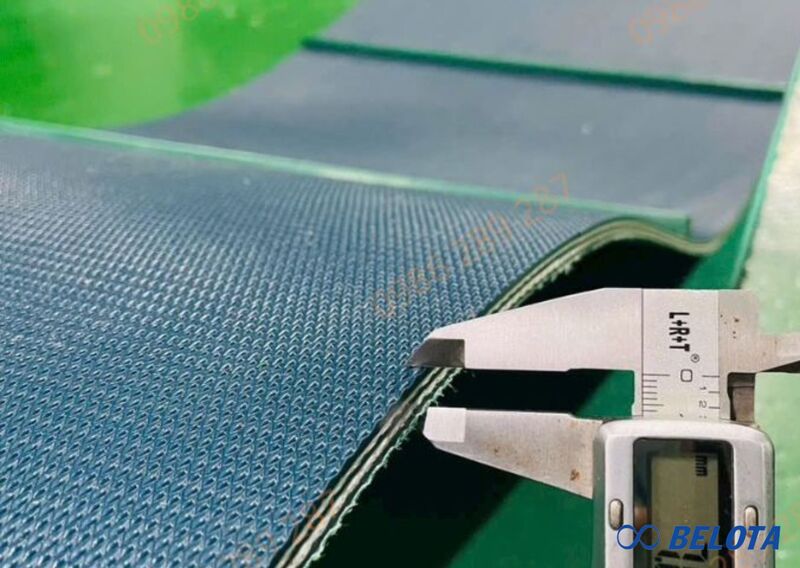
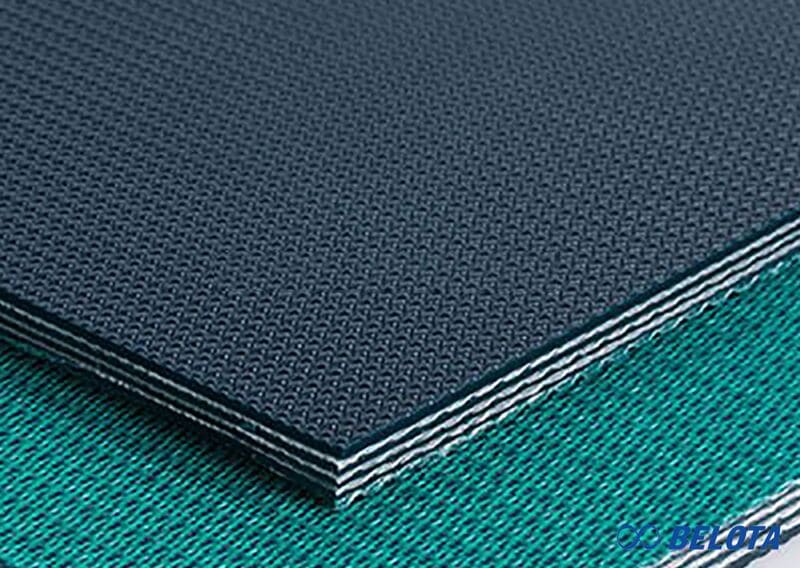
Structure of PVC Conveyor Belts for the Tile Industry
These conveyor belts are specifically designed to meet the demanding requirements of building material production:
- 4 fabric plies + 4 PVC layers with an approximate thickness of 9 mm
- 3 fabric plies + 3 PVC layers with an approximate thickness of 7 mm
- Strong bonding between fabric layers and PVC coating ensures high operational stability
- Snake-skin (rough top) surface pattern enhances friction and reduces slippage
- PVC top cover provides excellent abrasion and pressure resistance
- Fabric bottom layer improves pulley grip and ensures stable power transmission
This structure enables the conveyor belt to maintain durability in dusty, high-friction, and heavy-load environments.
Types of PVC Conveyor Belts Used in the Tile Industry
PVC conveyor belts in ceramic and tile production must deliver high durability, wear resistance, and stable performance. Common types include:
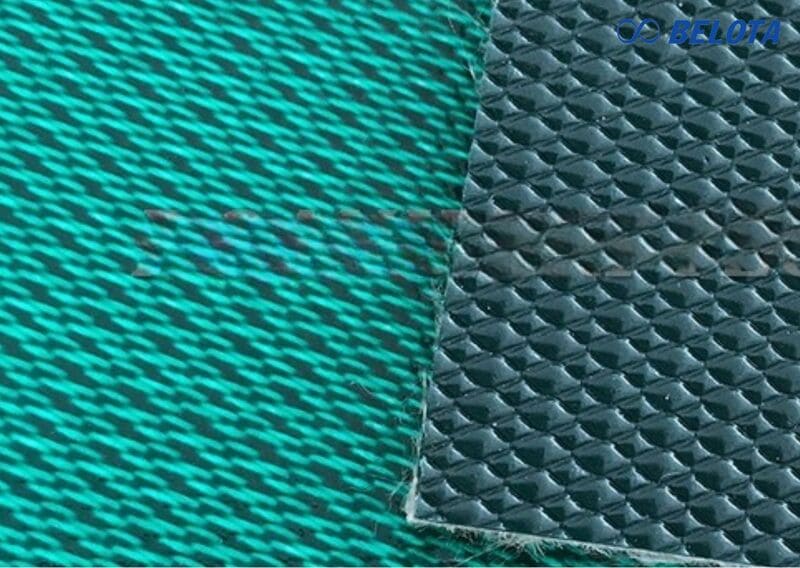
Rough top PVC conveyor belt (snake-skin / diamond pattern)
Provides high friction, ideal for grinding, polishing, and transporting heavy tiles.
Smooth PVC conveyor belt
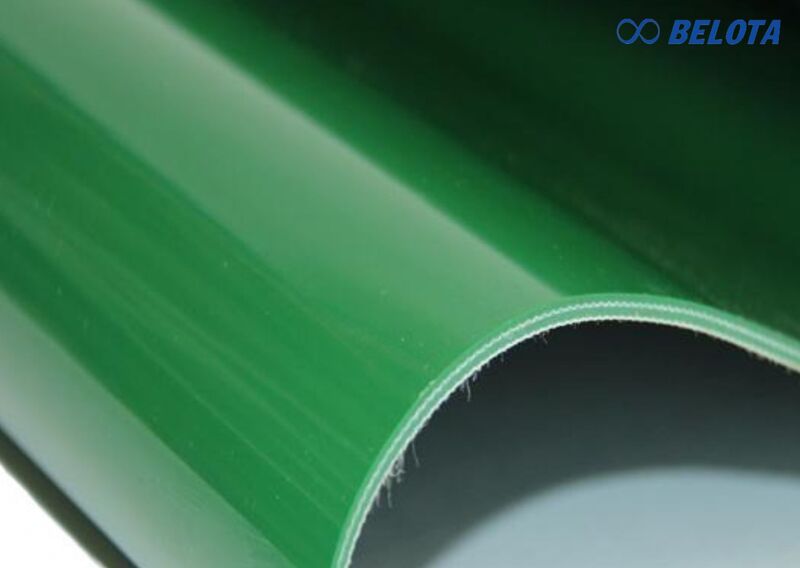
Used in finished product handling to prevent scratches and surface damage.
Ribbed / cleated PVC conveyor belt
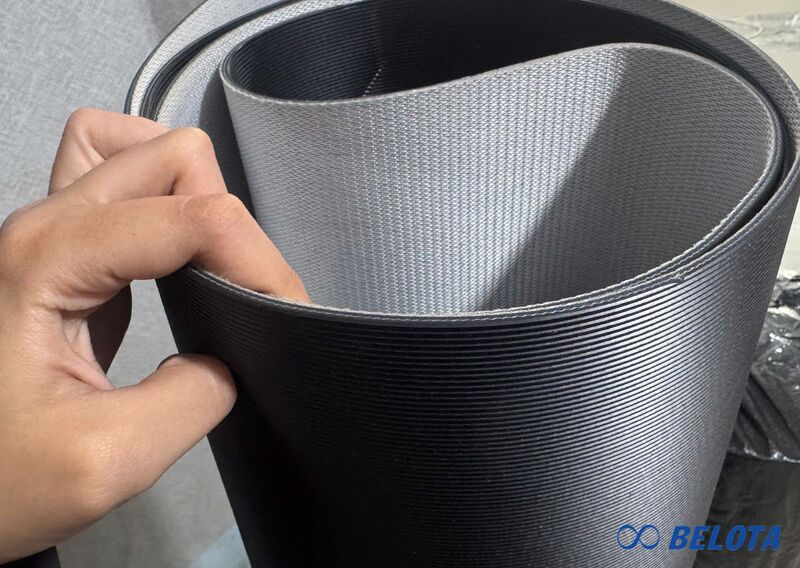
Suitable for inclined conveyors, helping keep tiles stable and preventing slipping.
High abrasion-resistant PVC conveyor belt
Designed for intensive surface processing environments with high friction.
Key Advantages of PVC Conveyor Belts for Tile Manufacturing
PVC conveyor belts offer several benefits for industrial production:
- Reliable performance in complex production environments
- Operating temperature range from -10°C to 80°C
- Strong impact resistance, reducing wear during operation
- High tensile strength with minimal elongation or deformation
- Anti-slip surface for safe tile transportation
- Long service life, reducing maintenance and replacement costs
These features make PVC conveyor belts suitable for tile production lines, grinding machines, and equipment from major manufacturers such as KEDA.
Applications in the Ceramic and Tile Industry
PVC conveyor belts are widely used across various production stages:
- Transporting ceramic tiles along production lines
- Surface grinding and polishing processes
- Handling granite and natural marble
- Production of artificial stone and composite materials
- General material handling in construction material processing
Their high load capacity and abrasion resistance ensure efficient operation in heavy industrial environments.
Why Choose BELOTA PVC Conveyor Belts?
With extensive experience in industrial conveyor solutions in Vietnam, Belota provides high-quality products tailored to customer needs:
- Professional consultation for each production line
- Custom fabrication based on specific requirements
- High-quality materials for long-term durability
- On-site technical support and maintenance
- Cost-effective solutions to optimize investment
BELOTA is committed to delivering PVC conveyor belts that meet the demands of continuous operation, heavy loads, and high-abrasion environments in the tile industry.
Conclusion
PVC conveyor belts for the ceramic and tile industry are essential components in modern production systems. Choosing high-quality conveyor belts helps improve operational efficiency, reduce maintenance costs, and ensure long-term system stability.